


Engaging Introductions: Capturing Your Audience’s Interest
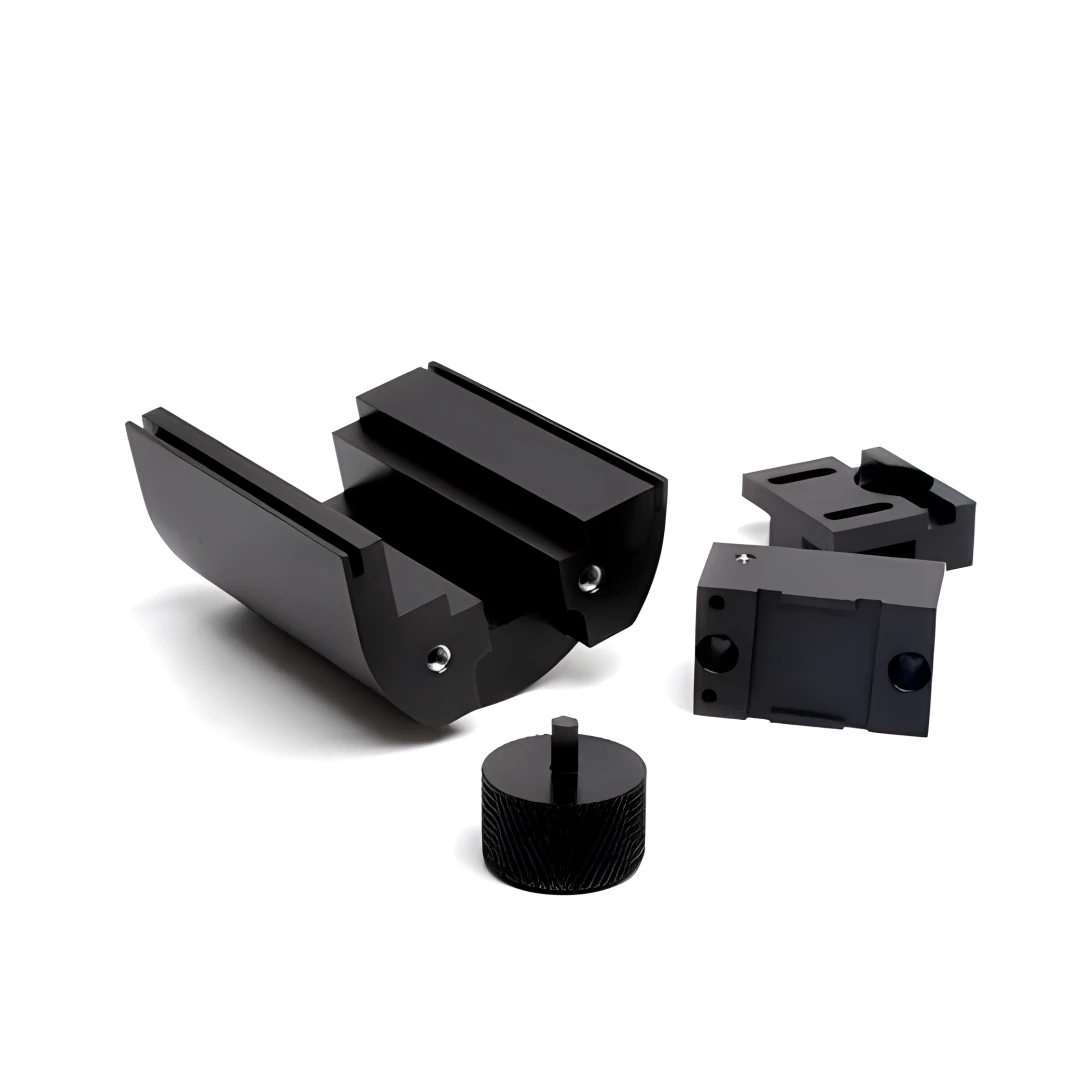
In automated precision equipment, testing instruments, fluid transmission modules, intelligent tooling conveyor systems and precision semiconductor processing equipment, slide rails serve as core guiding components that guarantee linear motion accuracy, bear reciprocating sliding loads and constrain motion trajectories. The repeated positioning accuracy, running smoothness, overall noise performance and long-term stability of equipment are highly dependent on the comprehensive properties of slide rail materials.
During operation, precision slide rails are continuously subjected to dynamic loads, reciprocating friction, impacts from frequent start-stop cycles and lateral pressure. Meanwhile, they must adapt to complex working conditions including internal heat accumulation, ambient temperature fluctuations, humid and dusty environments, as well as exposure to oil contaminants. Traditional slide rails are commonly made of steel, POM copolymer plastics, glass fiber reinforced nylon and other materials, which exhibit prominent drawbacks under long-term high-frequency operation. Metal slide rails feature a high friction coefficient and loud operating noise. They rely on continuous lubrication maintenance and are prone to dust jamming, rust and abnormal noise. Conventional plastic slide rails suffer poor wear resistance and creep resistance. Long-term compression and friction easily lead to surface collapse, rail deformation and enlarged clearances, resulting in equipment position deviation, sliding stuttering and increased positioning backlash. Such materials fail to meet the production requirements of high-end equipment demanding high precision, low noise, maintenance-free operation and long service life. Boasting outstanding self-lubrication, wear resistance, exceptional dimensional stability, wide-temperature weather resistance, anti-fatigue performance and corrosion resistance, PEEK special engineering plastic has become a core upgraded material for high-end precision slide rails.
Intrinsic Self-Lubrication & Low Friction Enables Oil-Free Silent and Durably Smooth Sliding
Dynamic transmission of precision equipment imposes stringent requirements on the uniformity and stability of sliding damping. Stuttering, resistance and abnormal noise are critical issues impairing equipment precision and operation experience. Hard contact between metal slide rails generates heavy vibration and obvious noise. Once lubricating grease dries up or fouling accumulates, unsmooth sliding and position jitter occur, requiring frequent shutdowns for maintenance and oil replenishment and lowering continuous operation efficiency. Ordinary plastic slide rails deliver acceptable smoothness at the initial stage, yet lack sufficient wear resistance. Grooves and loose clearances emerge after short-term high-frequency operation, leading to large backlash and poor precision in later service.
PEEK features dense and stable molecular structure with inherent solid self-lubrication and an extremely low friction coefficient. It achieves sustained and uniform low-resistance sliding without lubricants. After tens of thousands of reciprocating motions, the contact surface barely generates wear debris, fouling or abrasion grooves. Sliding damping remains consistent and stable, effectively eliminating mechanical noise and transmission vibration. It satisfies oil-free, silent and clean operation standards for dust-free workshops, precision instruments and clean processing equipment.
Superior Creep Resistance & Dimensional Stability Sustain Consistent Equipment Positioning Accuracy
Precision failure of slide rails rarely originates from structural damage; it is mostly caused by plastic deformation and stress relaxation under long-term dynamic loads. For conventional plastic materials, continuous compression, reciprocating friction and lateral stress gradually lead to surface collapse and edge deformation of rails, directly destroying straightness and fit clearances, which triggers inaccurate repeated positioning, workpiece offset and operational shaking. Thermal expansion and contraction induced by temperature variations further amplify precision deviation, causing continuous degradation of equipment performance.
PEEK possesses an ultra-low coefficient of thermal expansion, and its resistance to creep and stress relaxation far outperforms conventional engineering plastics. Under long-term loaded sliding, high-frequency vibration and alternating cold-hot conditions, the flatness, straightness and fit spacing of rails maintain original precision without looseness, deformation or position drift. Stable displacement and precise positioning can be guaranteed for every movement of equipment over long service periods, fundamentally addressing the industry pain point of progressive precision degradation of traditional slide rails.
Constant Performance Across Wide Temperature Range for Stable Operation in Diverse Severe Working Conditions
Precision equipment operates within vastly different environmental conditions. Frictional heat accumulation from continuous operation, high-temperature process radiation, hot summer ambient temperature, low-temperature startup and winter cold conditions continuously test the environmental tolerance of slide rail materials. Traditional plastic rails tend to soften, deform and collapse under pressure at high temperatures, while becoming rigid, brittle and losing toughness in low-temperature environments. Metal slide rails experience obvious thermal deformation under temperature swings and are susceptible to oxidative corrosion, resulting in drastically shortened service life in complex environments.
PEEK delivers excellent wide-temperature resistance with a continuous long-term service temperature up to 260°C. It retains rigidity and dimensional stability at high temperatures and maintains favorable structural toughness at low temperatures without cracking or functional failure. In addition, the material features ultra-low water absorption, outstanding hydrolysis resistance, moisture resistance and anti-aging performance. Its mechanical properties and guiding precision can be steadily maintained under various conditions including dry dust-free environments, humid dusty surroundings and frequent temperature alternations, greatly extending the maintenance-free operation cycle of equipment.
Corrosion Resistance, Anti-Fouling & Anti-Fatigue Properties Adapt to Complex Industrial Media and High-Frequency Cyclic Operation
In special scenarios such as chemical automation, fluid cleaning equipment and new energy processing, slide rails are persistently exposed to oil stains, acid-alkaline cleaning solutions, trace corrosive media and crystalline dust. Traditional materials are prone to corrosion aging, surface fouling and sliding resistance, hindering continuous equipment operation.
PEEK exhibits strong chemical inertness and resists long-term erosion by most industrial acids, alkalis and organic solvents. No swelling, corrosion, cracking or surface peeling occurs during service. Its dense, smooth surface hardly adheres to dust and crystalline impurities, delivering excellent self-cleaning performance and effectively preventing stalling faults caused by rail fouling and foreign substance accumulation. Meanwhile, PEEK boasts remarkable mechanical fatigue resistance. No cracks, delamination or performance degradation occurs under prolonged high-frequency reciprocating impact and alternating loads. It perfectly meets the demand for long-duration continuous operation of industrial equipment, lowering failure rates and maintenance costs effectively.The core competitiveness of high-end precision equipment lies in the long-term stability of detailed components. As the key carrier for dynamic guidance, the material quality of slide rails directly determines transmission precision, operation experience and service life of equipment. Integrating multiple advantages including low friction & silent operation, stable dimensions & high precision, temperature & corrosion resistance and anti-fatigue maintenance-free performance, PEEK fully overcomes performance shortcomings of traditional slide rail materials. Widely applied in precision automation modules, testing tooling, semiconductor equipment and fluid transmission mechanisms, it provides robust material support for efficient, stable and long-term operation of modern precision transmission equipment.